CNCAN Inspection: 5 Common Problems That Can Affect an Authorized Facility
Cele mai citite
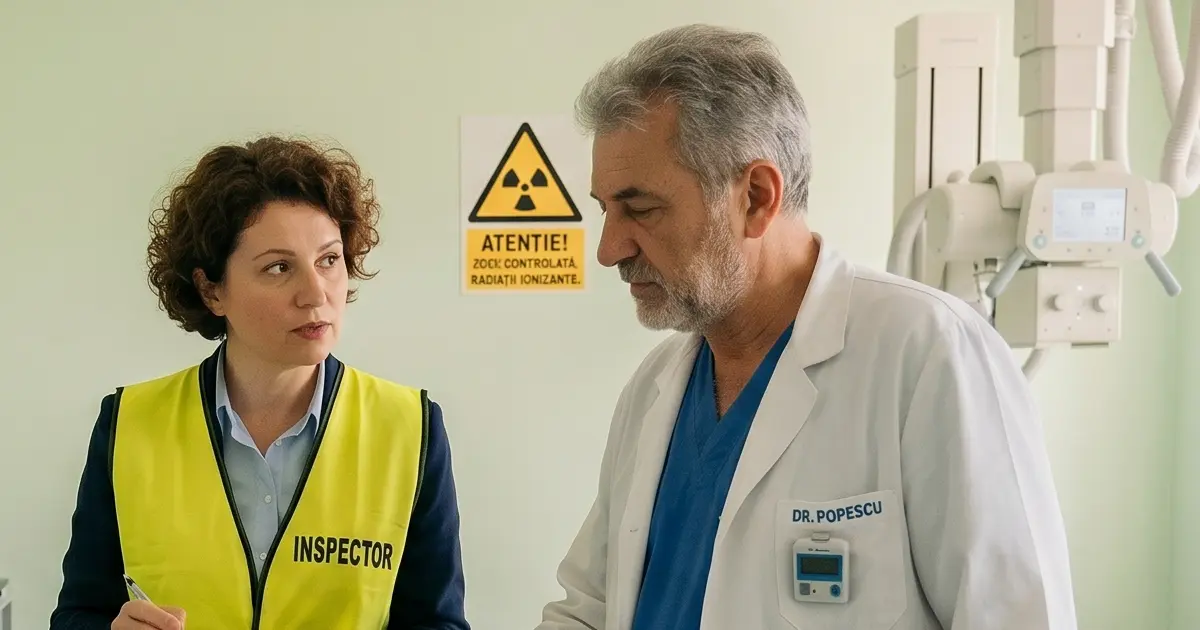
CNCAN Inspection: 5 Common Problems That Can Affect an Authorized Facility
A CNCAN inspection should not be viewed merely as a moment when the organization must present a file containing the required documents.
Inspectors may verify whether the activity actually carried out corresponds to the authorization, whether personnel are properly trained and authorized, whether dosimetric monitoring is correctly organized, and whether radiation protection measures are effectively implemented.
CNCAN representatives may enter premises where regulated activities are carried out, request documents and technical information, and perform measurements.
Following an inspection, they may require corrective actions and set deadlines for remediation. Under the conditions provided by law, they may also impose sanctions or propose the suspension or withdrawal of an authorization or practice permit.
Most problems do not necessarily arise from a serious radiological incident. They often begin with:
- expired documents;
- incomplete records;
- insufficiently trained personnel;
- outdated procedures;
- rules that are known in theory but not applied in daily work.
1. Authorizations and documents no longer reflect the actual activity
The first check should concern the CNCAN authorization:
- Is it still valid?
- Does it cover the activity currently being performed?
- Does it include the equipment, sources, and premises currently in use?
Problems may arise when:
- the authorization or another mandatory document has expired;
- the reauthorization procedure was not started on time;
- new equipment was installed without updating the documentation;
- equipment was moved to another room;
- the activity performed differs from the authorized activity;
- premises, shielding, or workflows were modified;
- the documents presented no longer reflect the actual situation.
Activities and sources subject to authorization must be covered by the appropriate authorization. Failure to request reauthorization before the document expires may constitute an administrative offence.
A file may appear complete, but if the information contained in it no longer matches the situation on site, the facility may experience difficulties during an inspection.
What should be checked?
Before the inspection, compare the authorization and its annexes with the current situation:
- what equipment is installed;
- in which rooms it is used;
- what activities are performed;
- which personnel are involved;
- which sources or installations are held;
- what changes have been made since the authorization was issued.
2. Personnel permits, training, or responsibilities are not up to date
A radiological installation cannot be operated in compliance simply because the equipment itself is authorized.
Personnel must also meet the requirements applicable to the activity being performed.
Common problems include:
- expired practice permits or permits that do not cover the relevant field;
- new personnel beginning work without their documents being verified;
- periodic training that has not been completed or documented;
- missing training records or signed training reports;
- unclear responsibilities between the employer, the Radiation Protection Officer, and operators;
- personnel who do not know the applicable working procedures;
- personnel who do not know what measures must be taken in the event of an incident.
Romanian Law No. 111/1996 includes among the applicable offences the use of personnel without the required training, without the applicable checks, or without the appropriate practice permit.
A Radiation Protection Officer, or RPO, appointed only formally is not sufficient.
During an inspection, it may be important whether that person:
- understands the activity being carried out;
- can quickly locate the required documents;
- monitors dosimetric results;
- organizes personnel training;
- verifies the implementation of procedures;
- knows how unusual situations must be managed.
Questions personnel should be able to answer
- Where is the radiation protection documentation kept?
- How should dosimeters be worn and stored?
- What must be done if a dosimeter is lost?
- Who must be notified in the event of an unusual situation?
- How is the equipment stopped in an emergency?
- Which areas have restricted access?
- What protective equipment must be used?
3. There are gaps in dosimetric monitoring
Dosimetric monitoring does not mean merely having a contract with a dosimetry service.
The entire process must be organized, documented, and traceable.
Problems may arise when:
- some individuals who should be monitored have not received a dosimeter;
- dosimeters are not exchanged or returned on time;
- there are monitoring periods without results and without a documented explanation;
- dosimeters are assigned incorrectly;
- personnel share dosimeters with colleagues;
- unusual values have not been investigated;
- dosimetric reports are not reviewed and archived;
- monitored workers have not been informed of their results;
- monitoring is not carried out through a dosimetry service designated by CNCAN.
Individual dosimetry regulations establish responsibilities for assessing occupational exposure, recording doses, and using dosimetry services designated by CNCAN.
A high value should not be ignored, but it should not automatically be interpreted as a dose actually received by the worker.
The following must be analyzed:
- the worker’s activity;
- their dosimetric history;
- how the dosimeter was worn;
- where it was stored;
- any accidental exposure of the dosimeter;
- the activities performed during the monitoring period.
If a dosimeter is lost, stolen, damaged, or cannot be used, the worker’s dose must be evaluated in accordance with the applicable procedures.
What should be included in the file?
- the dosimetric monitoring contract;
- an up-to-date list of monitored personnel;
- records of dosimeter distribution and return;
- dosimetric reports or dose statements;
- documents concerning unusual results;
- evidence that personnel were informed of their results;
- records of lost or damaged dosimeters;
- documents concerning assigned doses, where applicable.
4. Technical checks, QA/QC, and equipment records are incomplete
A common mistake is to consider maintenance performed by the service company equivalent to all quality control and radiation protection checks.
Technical maintenance, quality control, acceptance testing, constancy testing, radiation safety checks, and area measurements may serve different purposes.
The required documents depend on:
- the type of practice;
- the installation being used;
- the conditions included in the authorization;
- the specific requirements applicable to the activity.
Problems may arise if:
- periodic checks were not performed on time;
- reports have expired or cannot be presented;
- previously identified deficiencies were not corrected;
- equipment was repaired or modified without the necessary subsequent checks;
- there is no clear record of maintenance and technical interventions;
- measuring instruments do not have valid calibration documents;
- protective equipment has not been inventoried or checked;
- area measurements no longer correspond to the current configuration of the premises.
For diagnostic radiology and interventional radiology practices, the regulations approved by CNCAN Order No. 186/2022 apply together with the general radiation safety requirements and the conditions stated in the authorization.
Having a document is not enough
It must also be verified whether:
- the document is still valid;
- it correctly identifies the equipment used by the facility;
- the equipment serial number is correct;
- the room and configuration correspond to the current situation;
- the recommendations included in the report have been implemented;
- there is evidence that any identified nonconformities were corrected.
5. Procedures exist on paper but are not applied in practice
A facility may have a very well-organized documentation file and still encounter problems if the actual situation observed in the workplace does not correspond to that documentation.
The inspector may verify, among other things:
- the designation and marking of areas;
- access control;
- the placement of warning signs;
- the operation of warning systems;
- the availability and condition of protective equipment;
- how lead aprons and dosimeters are stored;
- whether working procedures are readily accessible;
- whether personnel understand the instructions;
- whether radiation protection rules are actually followed.
The documentation must describe what really happens in practice.
If a procedure states that dosimeters are stored in a designated location, but each employee keeps their dosimeter wherever they choose, there is a discrepancy between the declared system and the actual activity.
Similarly, simply displaying an emergency procedure is not sufficient if personnel do not know what they are expected to do.
What may happen following a CNCAN inspection?
Depending on the findings of the inspection, CNCAN may:
- record the findings in an inspection report;
- require corrective actions;
- establish remediation deadlines;
- request additional documents or technical checks;
- impose the sanctions provided by law;
- propose the suspension or withdrawal of the authorization;
- propose the suspension or withdrawal of a practice permit.
Failure to comply with the conditions of the authorization, failure to implement measures required through an inspection report, the use of inadequately trained personnel, or failure to apply for reauthorization on time are among the situations for which the law may provide administrative liability.
Proper preparation should not be aimed solely at avoiding a fine.
It should help identify problems before they affect:
- personnel safety;
- patient safety;
- equipment operation;
- continuity of the activity;
- the validity of the authorization.
Checklist before a CNCAN inspection
Before the inspection, verify at least the following:
- The authorizations and their annexes are valid.
- The activity actually performed corresponds to the authorized field.
- All equipment and sources are correctly identified.
- Personnel permits are valid and appropriate.
- Training has been completed and documented.
- The list of dosimetrically monitored personnel is up to date.
- There are no unexplained gaps in dosimetric records.
- Unusual dosimetric values have been investigated.
- QA/QC documents and technical reports are valid.
- Measuring instruments have the required documents.
- Protective equipment has been inventoried and is in suitable condition.
- Warning systems and access control measures are operational.
- Working and emergency procedures are up to date.
- Personnel know where the documents are kept and how they must respond.
- Measures required following previous inspections have been completed.
How can Q RAD Laboratory help?
Q RAD Laboratory can support organizations preparing for a CNCAN inspection through a structured review of the existing situation.
Depending on the organization’s needs, we can coordinate:
- verification of documentation and expiry dates;
- organization of dosimetric monitoring;
- review of personnel lists and monitoring requirements;
- identification of missing documents;
- review of procedures and records;
- personnel training;
- verification of how dosimeters are stored and used;
- provision of radiation protection equipment;
- the required measurements and technical checks;
- cooperation with authorized experts and strategic partners;
- coordination of the corrective measures identified.
Through its own resources and authorized strategic partners, Q RAD can manage the entire process, allowing the client to work with a single point of contact for:
- documentation;
- radiation protection;
- dosimetric monitoring;
- equipment;
- technical checks;
- support in relation to the competent authorities.
Conclusion
The most common problems identified during a CNCAN inspection are not always dramatic.
An expired permit, a missing month in the dosimetric records, undocumented training, or an outdated technical report may indicate that the radiation protection system is not being managed properly.
Preparation for an inspection should begin before the organization receives an official notification.
Periodic review of documentation, personnel, dosimeters, and actual working conditions helps the facility maintain continuous compliance, not only on the day of the inspection.
The information presented is general in nature. The exact documents and requirements may differ depending on the type of practice, the installations used, the conditions included in the authorization, and the applicable regulations.