Who Needs to Wear a Dosimeter?
Cele mai citite
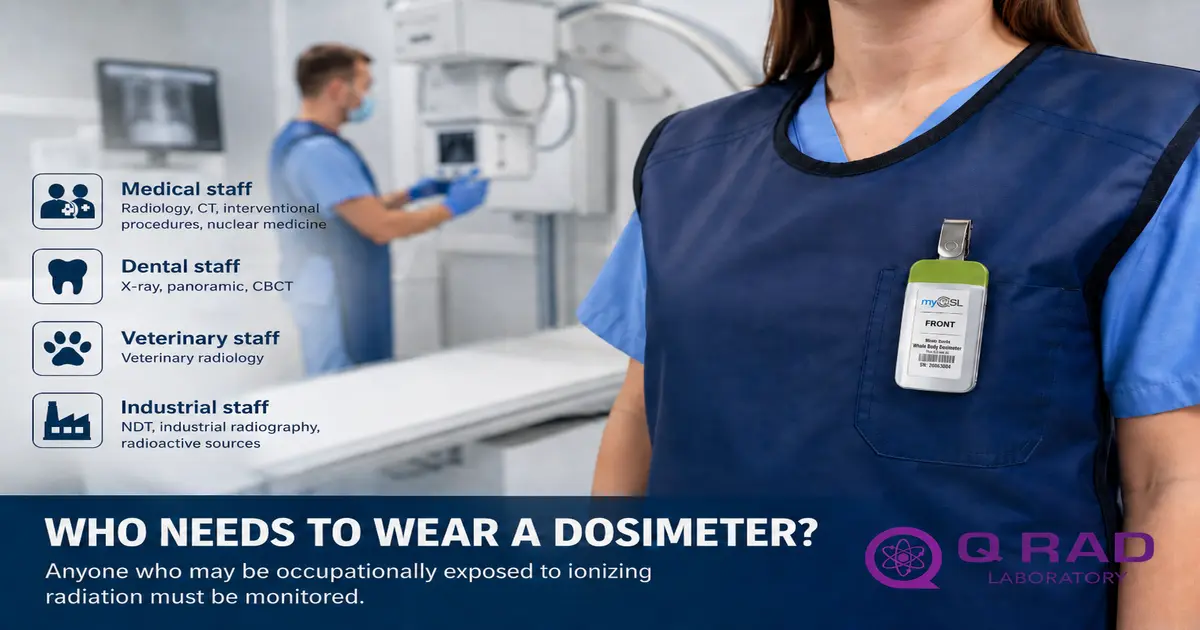
Who Needs to Wear a Dosimeter?
A dosimeter is one of the most important monitoring tools for people who work in environments with ionizing radiation. Although it is a small device, usually worn on work clothing or protective equipment, its role is essential: it measures occupational exposure and provides objective evidence of the doses received.
This question often comes up in clinics, dental practices, veterinary clinics, industrial companies, and laboratories: who actually needs to wear a dosimeter?
The short answer is: dosimetric monitoring is required for people who may be occupationally exposed to ionizing radiation, depending on the activity performed, the sources used, and the radiological risk assessment.
What is an occupationally exposed worker?
An occupationally exposed worker is a person who, because of their work activity, may receive doses of ionizing radiation. This type of exposure is different from the medical exposure of a patient or from natural background radiation.
For example, a patient who undergoes an X-ray examination is not an occupationally exposed worker. However, the person operating the X-ray equipment, assisting the procedure, or working frequently near the radiation source may fall into this category, if the risk assessment indicates it.
Dosimetric monitoring helps verify that occupational exposure remains under control and that radiation protection measures are effective.
Why is wearing a dosimeter necessary?
Ionizing radiation cannot be detected by human senses. It cannot be seen, heard, smelled, or felt during exposure. For this reason, exposure must be measured using specialized instruments.
A dosimeter helps with:
- measuring the dose received by the worker;
- tracking exposure over time;
- identifying unusual values;
- verifying the effectiveness of radiation protection measures;
- maintaining dosimetric records;
- complying with requirements applicable to activities involving ionizing radiation.
A correctly worn dosimeter provides important information for the monitored person, the employer, and the radiation protection officer.
Who needs to wear a dosimeter in the medical field?
In the medical field, dosimetric monitoring may be necessary for several categories of personnel, depending on the activity performed and the type of equipment used.
Common examples include:
- radiologists;
- radiology technicians;
- radiology nurses or assistants;
- personnel working with CT equipment;
- personnel involved in fluoroscopy procedures;
- angiography personnel;
- interventional radiology personnel;
- interventional cardiologists;
- urologists working with image-guided procedures;
- radiotherapy personnel;
- nuclear medicine personnel;
- medical physicists;
- technical or service personnel working on radiological equipment.
In interventional activities, where staff remain close to the patient and to scattered radiation, whole-body monitoring may not be the only requirement. Eye lens monitoring or extremity monitoring may also be necessary.
Does dental clinic staff need to wear a dosimeter?
In dental clinics that use radiological equipment, such as intraoral X-ray units, panoramic systems, or CBCT, staff may need dosimetric monitoring depending on the working method and the radiological risk assessment.
Personnel who may require monitoring include:
- the dentist operating the equipment;
- the dental assistant involved in the procedure;
- personnel who frequently enter the controlled area;
- the person designated for radiological activities, if occupationally exposed.
Even though doses in dental clinics are normally low when equipment is used correctly, dosimetric monitoring remains important for traceability, compliance, and verification of working conditions.
What about veterinary clinic staff?
Veterinary personnel may also need dosimeters, especially when radiological equipment is used for animal imaging.
In veterinary medicine, the risk may be influenced by the fact that the animal often needs to be positioned, immobilized, or assisted during exposure. If personnel remain close to the radiation source or exposure area, dosimetric monitoring may be necessary.
Possible categories include:
- veterinarians;
- veterinary assistants;
- technicians operating X-ray equipment;
- personnel involved in positioning the animal;
- personnel who regularly work near radiological equipment.
For these activities, radiation protection measures must be clearly defined: distance, shielding, protective equipment, and correct dosimeter use.
Who needs to wear a dosimeter in industry and NDT?
In industry, ionizing radiation may be used in activities such as industrial radiography, non-destructive testing, weld inspection, sealed radioactive sources, or radiation generators.
In these cases, dosimetric monitoring is important because sources may have high energies, and the work may take place under variable conditions, including field operations.
Personnel who may need dosimeters include:
- NDT operators;
- personnel working with sealed radioactive sources;
- personnel using radiation generators;
- industrial radiography technicians;
- personnel assisting work in controlled areas;
- personnel involved in transporting or handling radioactive sources.
In such activities, personal dosimetry is often complemented by strict access procedures, warning signs, dose rate measurements, and area monitoring.
Who needs to wear a dosimeter in nuclear medicine?
Nuclear medicine is a field where dosimetric monitoring is particularly important, because personnel may handle radiopharmaceuticals or open radioactive sources.
In this case, several types of monitoring may be necessary:
- whole-body monitoring — Hp(10);
- extremity monitoring — Hp(0.07);
- sometimes eye lens monitoring — Hp(3), depending on the procedures.
Personnel who may require monitoring include:
- nuclear medicine physicians;
- nurses or medical assistants;
- medical physicists;
- radiochemists;
- laboratory personnel;
- personnel preparing or administering radiopharmaceuticals;
- personnel managing radioactive waste.
A whole-body dosimeter is not always sufficient to evaluate hand exposure. For this reason, extremity dosimeters, such as ring dosimeters, may be used in certain situations.
Who needs eye lens dosimetry?
Eye lens monitoring is relevant in activities where the eyes may be exposed to scattered radiation, especially when the worker is close to the patient or radiation source.
Personnel who may need an eye lens dosimeter include:
- interventional radiologists;
- interventional cardiologists;
- angiography personnel;
- urologists using fluoroscopy;
- personnel frequently involved in image-guided procedures;
- other categories identified through the risk assessment.
In these cases, wearing an eye lens dosimeter should be combined with protective measures, such as lead glasses or suspended shields.
Do all employees in a clinic need to wear a dosimeter?
Not necessarily. A dosimeter is not required for every employee in a clinic, but for people who may be occupationally exposed to ionizing radiation.
For example, administrative staff, reception staff, or employees who do not enter areas with radiological risk usually do not require dosimetric monitoring.
However, the decision must be based on the activity performed and the radiological risk assessment. The job title alone is not the only criterion. What matters is the actual work performed and the real possibility of exposure.
What type of dosimeter is required?
The type of dosimeter is established based on the possible exposure.
The most common situations are:
Whole-body dosimeter — Hp(10)
Used to monitor deep dose, relevant for whole-body exposure.
Eye lens dosimeter — Hp(3)
Used when there is a risk of significant exposure at eye level.
Extremity dosimeter — Hp(0.07)
Used when the hands, fingers, or skin may be locally exposed, for example in nuclear medicine or when working with radioactive sources.
Area / ambient dosimeter — Hp*(10)
Used to monitor radiation levels in a specific area, not the individual dose received by a person.
Choosing the correct type of monitoring is important so that the results are relevant and useful.
What happens if a person who should be monitored does not wear a dosimeter?
If a person who should be monitored does not wear a dosimeter, traceability and compliance issues may occur. Without dosimetric data, it becomes difficult to demonstrate what exposure that person received during a specific period.
This situation may create difficulties during an inspection, an internal investigation, or when analyzing an unusual value reported for another member of the team.
Wearing a dosimeter should not be seen as a formality, but as part of the organization’s radiation protection system.
Who decides whether a dosimeter is necessary?
The need for dosimetric monitoring is established based on the activity performed, the risk assessment, applicable requirements, and workplace organization.
In practice, the decision may involve:
- the employer;
- the radiation protection officer;
- radiation protection documentation;
- the dosimetry service;
- authorization requirements and applicable regulations.
If there is uncertainty, the situation should be analyzed before starting the activity, in order to avoid gaps in monitoring.
Q RAD Laboratory — support for correct dosimetric monitoring
Q RAD Laboratory provides dosimetric monitoring services for occupationally exposed workers, including whole-body monitoring, eye lens monitoring, extremity monitoring, and ambient monitoring.
In addition, through its own resources and authorized strategic partners, Q RAD can support organizations carrying out activities involving ionizing radiation in identifying the correct type of monitoring, depending on the specific activity and applicable requirements.
If you are opening or operating a dental clinic, medical clinic, veterinary clinic, laboratory, or industrial activity involving ionizing radiation, Q RAD Laboratory can help you organize dosimetric monitoring and the radiation protection system in a safe, clear, and compliant way.
Conclusion
A dosimeter must be worn by people who may be occupationally exposed to ionizing radiation. Not every employee in an organization requires dosimetric monitoring, but people directly or frequently involved in radiological activities must be properly assessed.
Dosimetric monitoring helps protect workers, maintain records, comply with applicable requirements, and prevent unnecessary exposure.
The correct choice of dosimeter type — whole-body, eye lens, extremity, or area monitoring — must be made according to the radiological risk and the activity performed.