Everything You Need to Know About Dosimetric Monitoring
Cele mai citite
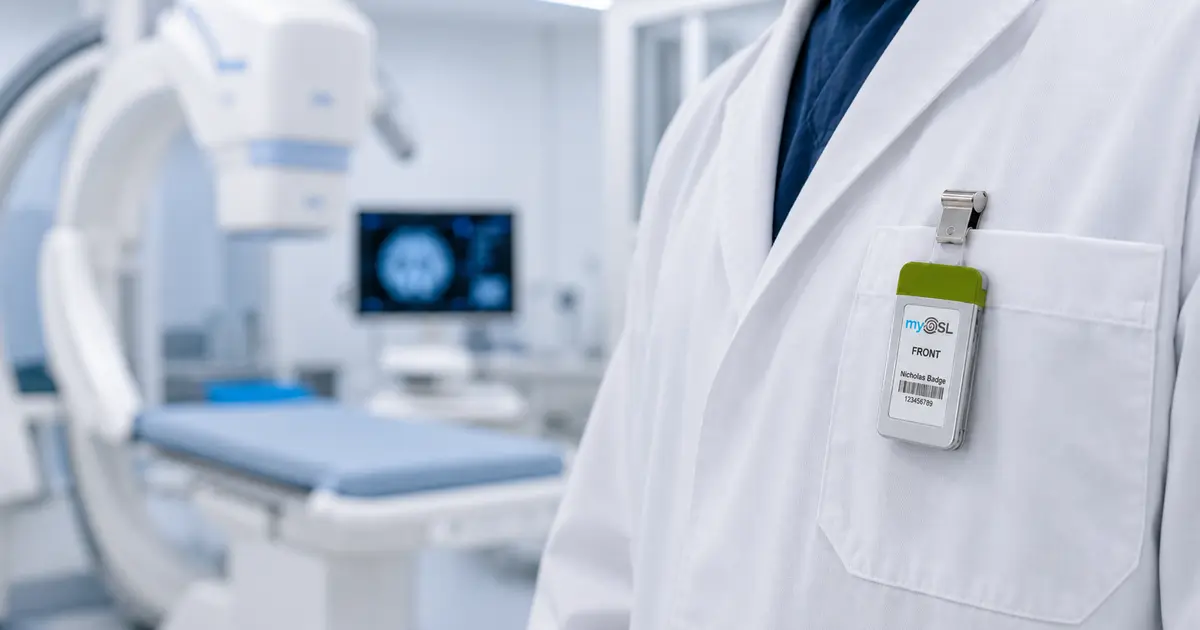
Dosimetric monitoring is one of the most important radiation protection measures for people who work in environments with ionizing radiation. Whether we are talking about medical radiology, dentistry, nuclear medicine, radiotherapy, veterinary clinics, industry, or non-destructive testing, occupational exposure must be monitored, recorded, and kept under control.
For the worker, the dosimeter provides objective evidence of exposure to ionizing radiation. For the employer, dosimetric monitoring helps demonstrate that the activity is carried out under safe and compliant conditions. For the radiation protection officer, dosimetric results are an important tool for verification, analysis, and prevention.
What is dosimetric monitoring?
Dosimetric monitoring is the process through which the doses of ionizing radiation received by occupationally exposed workers are measured, evaluated, and recorded. This is done using personal dosimeters, worn by employees during their work activity.
The purpose of monitoring is not only to comply with a legal requirement, but also to prevent unnecessary exposure. In radiation protection, the main objective is to keep doses as low as reasonably achievable, in relation to the activity performed and according to the ALARA principle: As Low As Reasonably Achievable.
In other words, it is not enough for the dose to remain below the legal limit. Exposure must be continuously optimized so that it is kept as low as possible, without compromising the activity being performed.
Who needs dosimetric monitoring?
Dosimetric monitoring is required for people who may be occupationally exposed to ionizing radiation. Common examples include:
- radiologists, radiology technicians, and radiology assistants;
- personnel in dental clinics using intraoral X-ray units, panoramic systems, or CBCT;
- personnel in medical clinics using CT, fluoroscopy, or angiography equipment;
- personnel working in nuclear medicine and radiotherapy;
- veterinarians and veterinary personnel using radiological equipment;
- personnel in industry, NDT, or industrial radiography involving radiation sources;
- personnel who handle, transport, or work near radioactive sources;
- persons designated or involved in radiation protection activities.
The need for monitoring is established based on the type of activity, the sources used, the radiological risk assessment, and the requirements applicable to each practice.
What types of dosimeters are used?
Depending on the activity, a worker may wear one or more types of dosimeters. The most commonly used are passive dosimeters, which are worn during the monitoring period and then sent to a specialized laboratory for reading.
A dosimeter is not just an accessory. It is the device that provides information about the occupational exposure of the monitored person and contributes to the traceability of the received doses.
1. Whole-body dosimeter — Hp(10)
The whole-body dosimeter is used to estimate the deep dose, associated with the quantity Hp(10). This is relevant for the exposure of internal organs to penetrating radiation, such as X-rays or gamma radiation.
As a general rule, the dosimeter is worn at chest level, according to the instructions received. In situations where a protective apron is used, the correct wearing position must be clearly established through the radiation protection procedure applicable to the workplace.
It is important for the dosimeter to be worn consistently and correctly, because incorrect positioning may lead to results that do not reflect the worker’s actual exposure.
2. Eye lens dosimeter — Hp(3)
The eye lens dosimeter is used to monitor eye exposure, especially in activities where the worker is close to the patient or to the source of scattered radiation.
Relevant examples include interventional radiology, interventional cardiology, urology, angiography, or other image-guided procedures.
Eye lens monitoring is important because repeated exposure may, under certain conditions, contribute to the development of radiation-induced cataracts. For this reason, correct wearing of the eye lens dosimeter and the use of appropriate protective eyewear can play an important role in reducing risk.
3. Extremity dosimeter — Hp(0.07)
The extremity dosimeter is used to estimate the dose to the skin, hands, or fingers, associated with the quantity Hp(0.07).
This type of monitoring is especially recommended for personnel who directly handle radioactive sources or contaminated materials, for example in nuclear medicine, laboratories, or certain industrial activities.
A common example is the ring dosimeter, worn on the finger, which is used to assess hand exposure during the handling of sources or radiopharmaceuticals.
What do Hp(10), Hp(3), and Hp(0.07) mean?
Dosimetric reports may include values such as Hp(10), Hp(3), or Hp(0.07). These are operational dosimetric quantities used to evaluate external exposure.
In short:
Hp(10) — deep dose at 10 mm, used for whole-body monitoring.
Hp(3) — dose at 3 mm, used for eye lens monitoring.
Hp(0.07) — superficial dose at 0.07 mm, used for skin and extremities.
These values help differentiate the type of exposure: whole-body exposure, eye exposure, or skin and extremity exposure.
How often are dosimeters changed?
The frequency of dosimeter exchange depends on the type of activity, the level of risk, and the established monitoring requirements. In practice, monitoring may be performed monthly or quarterly, depending on the specific situation.
It is important that dosimeters are returned on time for reading, and that the results are analyzed and kept in the organization’s records. Missing monitoring periods or repeated delays may create traceability and compliance issues.
For the employer, proper organization of the dosimeter exchange process is essential. Dosimeters must be distributed, worn, collected, and sent for reading according to the established schedule.
How should a dosimeter be worn correctly?
A dosimeter provides useful information only if it is worn correctly. Some important rules are:
- the dosimeter must be worn by the person to whom it was assigned;
- it must not be shared with colleagues;
- it must not be left inside the radiology room when the worker is not present;
- it must not be intentionally exposed to radiation;
- it must not be stored in a car, near heat sources, or in areas with high humidity;
- it must be returned on time for reading;
- it must be worn according to the instructions received from the radiation protection officer or the dosimetry service.
If the dosimeter is lost, damaged, or accidentally exposed, the situation must be reported as soon as possible. Depending on the case, a new dosimeter may need to be issued and the situation properly documented.
What happens if an unusually high dose appears?
An unusually high value on the dosimetric report does not automatically mean that the person was actually exposed to that dose.
There may be several possible explanations: incorrect wearing of the dosimeter, leaving it near a radiation source, improper storage, accidental exposure of the dosimeter, or, in some cases, a real occupational exposure event.
For this reason, unusual values must be analyzed by the radiation protection officer, together with the employer and the dosimetry service. The purpose is to establish the context, verify the activities performed, and correctly document the situation.
A proper investigation should take into account the monitored person’s activity, dosimetric history, working conditions, dosimeter positioning, and any unusual events during the monitoring period.
Dosimetric monitoring and dose limits
For occupationally exposed workers, dose limits are established by the applicable regulations. In practice, dosimetric monitoring helps verify that exposure remains below the prescribed limits and that radiation protection measures are effective.
For the whole body, the annual limit is 20 mSv/year.
For the eye lens, the annual limit is 20 mSv/year.
For the skin and extremities, the annual limit is 500 mSv/year.
These limits should not be viewed as target values. In radiation protection, the goal is not to approach the limit, but to keep exposure as low as reasonably achievable, depending on the activity performed.
In most properly conducted medical and dental activities, recorded doses are usually well below annual limits. However, monitoring remains essential because it provides traceability, confirmation, and the ability to quickly identify any deviation from the normal situation.
Why is dosimetric monitoring important for the employer?
For the employer, dosimetric monitoring is not just a formality. It is part of the organization’s radiation protection system and contributes to:
- compliance with legal requirements applicable to activities involving ionizing radiation;
- protection of the health of occupationally exposed workers;
- identification of unusual values or possible work practice errors;
- maintaining clear dose records;
- preparing documents required for inspections;
- improving internal radiation protection procedures.
A correct monitoring system helps the organization demonstrate that occupational exposure is monitored, analyzed, and kept under control.
Dosimetric monitoring can also indicate situations that require further checks, such as changes in work procedures, organizational issues, incorrect use of protective equipment, or improper storage of dosimeters.
Dosimetric monitoring does not replace radiation protection
It is important to understand that dosimetric monitoring is not the only protection measure. The dosimeter measures exposure, but it does not directly reduce it.
Exposure is reduced through radiation protection measures such as:
- limiting exposure time;
- increasing the distance from the radiation source;
- using shielding and protective equipment;
- following work procedures;
- training personnel;
- periodically checking equipment;
- correctly organizing controlled and supervised areas.
Dosimetry and radiation protection must be considered together. The dosimeter shows what happened, while radiation protection measures help prevent unnecessary exposure.
Q RAD Laboratory — partner for dosimetric monitoring and radiation protection
Q RAD Laboratory provides dosimetric monitoring services for occupationally exposed workers, including monitoring for the whole body, eye lens, extremities, and ambient monitoring, depending on the specific activity.
In addition, through its own resources and through authorized strategic partners, Q RAD can support organizations carrying out activities involving ionizing radiation in several stages: documentation, authorization, radiation protection, equipment, training, preparation for inspections, and continuous operational support.
If you are opening or operating a dental clinic, medical clinic, veterinary clinic, laboratory, or industrial activity involving ionizing radiation, Q RAD Laboratory can help you build a safe, organized, and compliant system.
Conclusion
Dosimetric monitoring is one of the most important components of radiation protection. It transforms exposure to ionizing radiation from an invisible risk into a measurable, documented, and controlled process.
Correct wearing of dosimeters, careful interpretation of results, and maintaining clear records contribute to worker protection, compliance with regulatory requirements, and the responsible operation of any activity involving ionizing radiation.