What Is a Radiation Protection Officer and What Are Their Responsibilities?
Cele mai citite
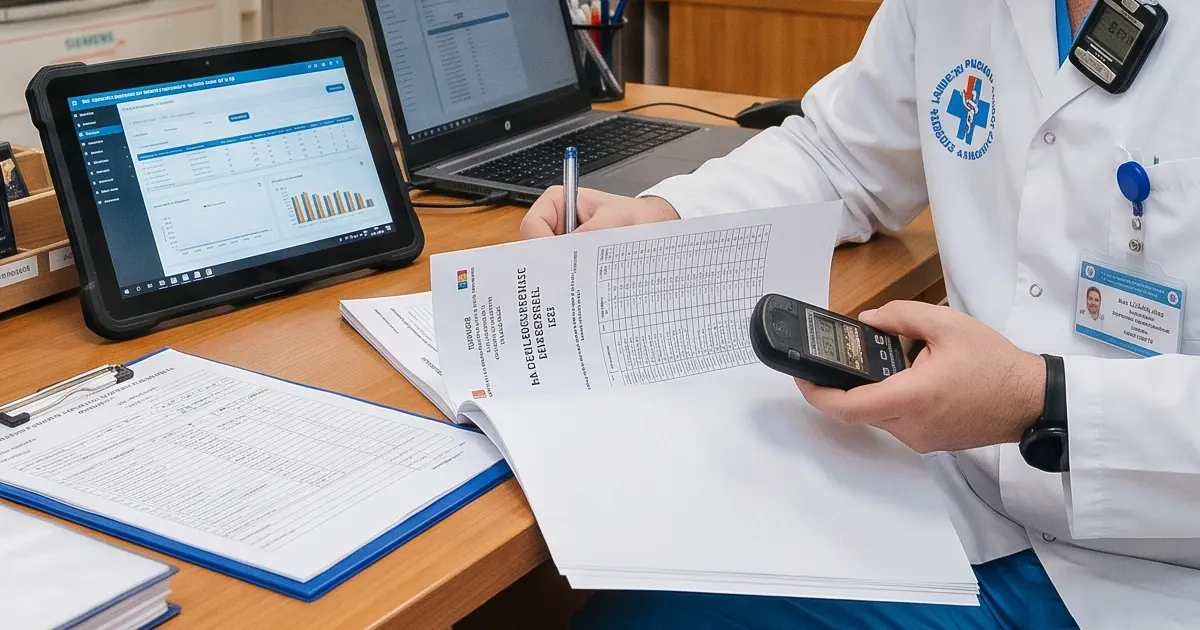
What Is a Radiation Protection Officer and What Are Their Responsibilities?
The Radiation Protection Officer, often abbreviated as RPO, is one of the key persons in any organization carrying out activities involving ionizing radiation. Although the role is sometimes seen as an administrative requirement for the CNCAN file, its practical importance is much greater.
The RPO supports the day-to-day implementation of radiation protection measures, document control, procedural compliance, dosimetric monitoring, and staff training. In practice, the RPO connects the real activity in the workplace with management, occupationally exposed workers, and regulatory requirements.
For diagnostic radiology and interventional radiology practices, current Romanian regulations require the medical facility to develop, implement, and document a radiation protection programme proportionate to the nature and magnitude of the risks associated with the practice. This programme must cover all phases of the practice, from siting and construction to use and termination of use.
What is an RPO?
An RPO is the person formally appointed to support the implementation of radiation protection requirements in an area or activity where radiological risk exists.
In a medical clinic, dental practice, veterinary clinic, laboratory, or industrial facility, the RPO must understand the activity being carried out, the sources or installations used, the personnel involved, the applicable procedures, and the documents that must be maintained.
The RPO is not simply “the person who signs the papers.” They must understand what happens in practice and be able to identify discrepancies between documentation and the real situation on site.
Who must appoint an RPO?
In diagnostic radiology and interventional radiology practices, the medical facility must formally appoint at least one Radiation Protection Officer for each controlled area, taking into account the radiological risk to workers and other persons. The regulations also provide for consultation with a radiation protection expert in determining a number of RPOs proportionate to the nature and magnitude of the risks associated with the practice.
This requirement is important because not all activities have the same level of risk. A dental clinic with an intraoral X-ray unit is not as complex as a facility using fluoroscopy, angiography, CT, or interventional procedures.
Depending on the activity, a single RPO may be sufficient, or several responsible persons may be needed, especially where there are multiple controlled areas, several installations, or extended working hours.
The RPO must have real authority
One essential aspect is the RPO’s position within the organization. The regulations require the Radiation Protection Officer to report directly to the legal representative of the facility and to be granted the administrative authority necessary to perform their duties.
This means the RPO should not be a person with no real ability to act. If they identify a problem, they must be able to request corrective measures, stop an inappropriate practice, request documents, follow up on deficiencies, and inform management.
An RPO who is appointed only formally, without being listened to or having access to relevant information, cannot ensure effective radiation protection.
What does the RPO monitor in daily activity?
The RPO helps ensure that activities involving ionizing radiation are carried out in accordance with the documentation, procedures, and applicable requirements.
The RPO may monitor:
- the existence and validity of CNCAN documents;
- compliance with the certificate or authorization conditions;
- organization of controlled and supervised areas;
- warning signs and access control;
- correct wearing and storage of dosimeters;
- records of dosimetrically monitored personnel;
- review of dosimetric reports;
- staff training;
- use of personal protective equipment;
- condition of lead aprons, thyroid collars, and protective eyewear;
- service, QA/QC, and area monitoring documentation;
- documentation of unusual situations;
- implementation of measures required during inspections.
In a well-organized facility, the RPO does not act only when an inspection or problem occurs. They help keep the system functional at all times.
The RPO and dosimetric monitoring
Dosimetric monitoring is one of the areas where the RPO’s role is particularly important.
The RPO must ensure that people who require monitoring have dosimeters, that these are correctly distributed, worn according to instructions, returned on time, and that results are reviewed and archived.
The medical facility must provide appropriate dosimetric monitoring equipment and individual radiation protection equipment, and must train personnel in their correct use. Personnel must use monitoring devices and protective equipment properly.
The RPO should pay attention to:
- missing periods in dosimetric history;
- lost or damaged dosimeters;
- dosimeters not returned on time;
- exposed workers not included in monitoring;
- unusual values;
- changes in activity that may require a different type of dosimeter;
- situations where eye lens or extremity monitoring may be necessary.
An unusual dosimetric value must not be ignored. It should be analyzed in context: what activity the person performed, where the dosimeter was worn, how it was stored, whether the dosimeter was accidentally exposed, or whether there are indications of a real occupational exposure.
The RPO and staff training
Radiation protection does not work through documentation alone. It depends heavily on how personnel understand and apply the rules.
The regulations require workers involved in diagnostic radiology and interventional radiology practices to be properly trained and qualified for their position. The facility must maintain documented records of training, qualifications, participation in radiation protection training programmes, and workplace instruction.
The RPO must ensure that personnel know:
- how the dosimeter is worn;
- where the dosimeter is stored;
- what protective equipment must be used;
- what to do in an unusual situation;
- how to apply the principles of time, distance, and shielding;
- who must be notified in case of an incident;
- where the applicable procedures are kept;
- what restrictions apply in the controlled area.
Training performed only for a signature is not enough. Personnel must be able to apply the rules in real work conditions.
The RPO and documentation
One of the most visible responsibilities of the RPO is the organization and updating of radiation protection documentation.
Depending on the type of activity, the file may include:
- CNCAN registration certificate or authorization;
- annexes and specific conditions;
- technical documentation for the installations;
- radiation protection programme;
- working procedures;
- procedures for unusual situations;
- list of occupationally exposed workers;
- practice permits;
- signed training records;
- dosimetric monitoring contracts;
- dosimetric reports;
- QA/QC reports;
- area monitoring reports;
- service and repair documents;
- records of individual protective equipment;
- inspection reports and corrective actions.
During an inspection, it is not enough for the documents to exist somewhere. They must be up to date, coherent, easy to locate, and consistent with the real activity.
The RPO and the radiation protection programme
The radiation protection programme is one of the essential elements of the radiation protection system. The regulations state that the radiation protection management system includes, among other elements, quality assurance for medical exposures, the radiation protection programme for exposed workers, and quality control for medical radiological installations.
In practice, the RPO contributes to the implementation of this programme by:
- verifying compliance with procedures;
- monitoring records;
- communicating with personnel;
- identifying nonconformities;
- proposing corrective actions;
- preparing for inspections;
- cooperating with the radiation protection expert;
- cooperating with the dosimetry service;
- cooperating with service and technical verification companies.
A good programme should not remain only in a document. It must be visible in the way the facility works.
Internal RPO or external support?
Many organizations ask whether the RPO must be an internal employee or whether external support can be used.
The answer depends on the specific activity, applicable requirements, organizational structure, and the exact responsibilities involved. What matters is that the designated person meets the applicable requirements, is formally appointed, and has real access to the activity, documentation, and management.
In practice, external support can be useful for technical guidance, document review, inspection preparation, staff training, or coordination of radiation protection measures. However, the facility must ensure that responsibilities are clear and that radiation protection is managed continuously, not only occasionally.
What happens if the RPO exists only “on paper”?
An RPO who is formally appointed but not actively involved can create a false sense of compliance.
Problems arise when:
- personnel do not know who the RPO is;
- documents are not updated;
- dosimeters are not managed correctly;
- dosimetric values are not reviewed;
- procedures are not applied;
- training is only formal;
- protective equipment is not checked;
- changes in activity are not documented;
- no one can explain the radiation protection system during an inspection.
Radiation protection cannot function through signatures alone. It must be present in daily activity.
Questions an RPO should be able to answer
A well-prepared RPO should be able to answer questions such as:
- What installations or sources are used?
- Which areas are controlled areas?
- Who are the occupationally exposed workers?
- Who wears a dosimeter and what type?
- Where are dosimetric reports kept?
- What happens if a dosimeter is lost?
- When was the last staff training performed?
- When were the last area measurements performed?
- When do important documents expire?
- What protective equipment is available?
- How are lead aprons and thyroid collars checked?
- What must be done in case of an incident?
- What measures were required during the last inspection?
If these questions do not have clear answers, the radiation protection system should be reviewed.
How can Q RAD Laboratory help?
Q RAD Laboratory can support organizations carrying out activities involving ionizing radiation in organizing and maintaining their radiation protection system.
Through our own resources and authorized strategic partners, Q RAD can coordinate:
- assessment of the current situation;
- documentation review;
- organization of dosimetric monitoring;
- identification of dosimeter requirements;
- preparation of records;
- staff training;
- procedure review;
- preparation for CNCAN inspections;
- identification of missing documents;
- supply of radiation protection equipment;
- cooperation with experts and authorized companies;
- support for correcting nonconformities.
This helps the facility maintain a clearer, better organized radiation protection system that is easier to support during inspections.
Conclusion
The Radiation Protection Officer is a central element in the safe and compliant operation of any activity involving ionizing radiation. The RPO should not be viewed as a simple administrative requirement, but as the person who helps maintain control over documentation, dosimetry, training, procedures, and radiation protection measures.
An actively involved RPO can help prevent problems before they appear during an inspection, support personnel in working correctly, and contribute to the protection of workers, patients, and the organization.
This article provides general information. Exact requirements may differ depending on the type of practice, installations used, authorization conditions, approved documentation, and applicable regulations.